
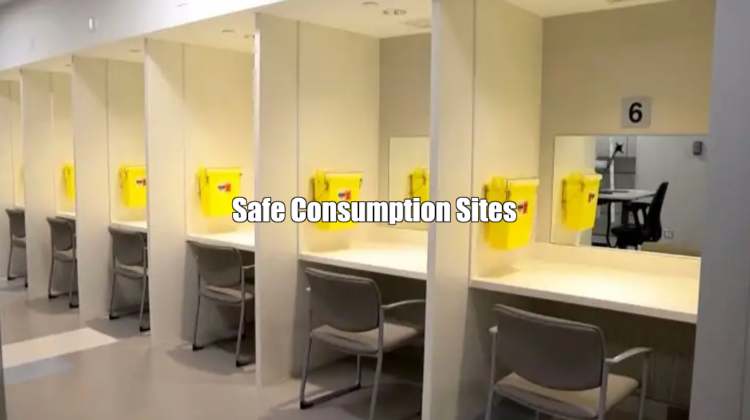
In this article I will be discussing about the consumption sites that you are use that are safe and reliable. If you are here because you are looking for the safe site then you come to the right place.
Safe consumption sites are one of those things you don’t think about until life gets very real, very fast. Maybe you, a friend, or a family member is dealing with substance use. Maybe you keep hearing about these “Safe consumption sites” or “secure consumption sites” on the news and think: What even is that? A fancy snack bar? A weird spa?
In this article, I’ll walk you through what Safe consumption sites are, why they exist, how they work, how to find the safest consumption sites near you, and how we can use them to keep people alive and connected to help. I’ll keep it in simple English, with a bit of humor, but with full respect for how serious this topic really is.
What is consumption?
Let’s clear up the word “consumption” first, because on its own it sounds like either an old-timey disease or what happens when I’m left alone with a pizza.
In this context, consumption means using drugs — usually street drugs like heroin, fentanyl, cocaine, meth, or other substances. When people talk about Safe consumption sites, they mean places where people can consume (use) drugs under supervision instead of using alone in an alley, a park, a stairwell, or a bathroom.
Public health agencies often use terms like:
- Supervised consumption sites (SCS)
- Drug consumption rooms (DCRs)
- Overdose Prevention Centers (OPCs)
- Safe injection sites (when the main method is injection)
These are all variations of the same basic idea: a supervised, safer space to use pre-obtained drugs with trained staff watching and ready to respond. (Wikipedia)
The goal isn’t to cheer on drug use. The goal is:
- Keep people alive
- Reduce overdoses and infections
- Give people a doorway into health care, housing, and treatment
Because if someone isn’t alive, you and I both know they don’t get a second chance to make different choices.
What are Safe consumption sites?
Safe consumption sites (or secure consumption sites, or overdose prevention centers) are health-focused spaces where people can:
- Bring their own drugs (nothing is sold on-site)
- Use them in a clean, supervised environment
- Be monitored by trained staff (nurses, harm reduction workers, peers)
- Get sterile equipment like clean syringes and supplies
- Receive naloxone (to reverse opioid overdoses) if needed
- Get referrals to addiction treatment, mental health care, housing, and social services
Globally, there are now over 100 such consumption sites in more than 10 countries, including Canada, Australia, Switzerland, Germany, Portugal, Spain, the Netherlands, and parts of the United States and Mexico.
These are not wild drug party rooms. They are closer to:
- A small medical clinic
- A community health center
- A quiet, supervised room with individual booths
…just with the very real twist that people are using illegal drugs there — in the safest way possible under the circumstances.
How consumption works (at a Safe consumption site)
Let me walk you through what usually happens when you go to one of these secure consumption sites. The details vary by country and city, but the general flow is similar.
- Arrival and sign-in
- You walk in — no white-coated person yelling, “SHAME!”
- Staff may ask for a nickname or code, not legal name, to protect privacy.
- They might ask what substance you’re using and how you plan to use it (injecting, smoking, snorting, etc.).
- Health and safety check
- Staff asks simple questions:
- When did you last use?
- Are you on any medications?
- Do you have allergies?
- Sometimes they check for signs of overdose risk (really sedated, breathing issues, etc.).
- Staff asks simple questions:
- Using the consumption area
- You’re shown to a booth or space with:
- A clean surface
- Sterile equipment (needles, cookers, filters, water, etc., depending on the service)
- A sharps container for used equipment
- You use your drugs yourself. Staff do not inject or dose you.
- Staff keep an eye on you in case of overdose, allergic reaction, or other emergencies.
- You’re shown to a booth or space with:
- Overdose response if needed
- If you overdose, staff can:
- Give naloxone
- Provide oxygen and basic life support
- Call an ambulance if needed
- Research from sites in Canada and Australia shows thousands of overdoses reversed and no deaths recorded inside legal supervised consumption facilities.
- If you overdose, staff can:
- Chill, coffee, support
- Many sites have a post-consumption area where you sit for a bit:
- Tea or coffee
- Snacks
- Basic wound care
- Conversations with peers or counselors
- Staff may gently ask if you want help with housing, detox, methadone/buprenorphine, or mental health support.
- Many sites have a post-consumption area where you sit for a bit:
- Referrals and follow-up
- Over time, some people build trust and accept help with:
- Treatment programs
- Primary health care
- HIV or hepatitis C care
- Housing or social support (EUDA)
- Over time, some people build trust and accept help with:
It’s not a one-time magic fix. It’s more like a safer doorway into a system that might have felt closed or hostile before.
Features of consumption
Let’s talk about the main features that make Safe consumption sites and secure consumption sites special — and why many people call them the safest consumption sites available for people who use drugs.
1. Medical supervision and overdose prevention
Trained staff are watching for signs of overdose: slowed breathing, sudden unconsciousness, blue lips, etc. They can act in seconds, not minutes.
At sites like Sydney’s Medically Supervised Injecting Centre and Vancouver’s Insite, thousands of overdoses have been managed with zero recorded deaths inside the facilities since opening.
2. Sterile equipment and infection control
Secure consumption sites provide:
- Sterile syringes and other supplies
- Education on safer use (for example, not sharing needles)
- Sharps disposal containers
This helps reduce:
- HIV transmission
- Hepatitis C transmission
- Serious infections like abscesses and endocarditis (heart infections)
3. Connection to health and social services
For many people who use drugs, regular services feel like they come with side orders of:
- Judgment
- Stigma
- “Just quit” speeches
Safe consumption sites are designed to be low-threshold and non-judgmental. From there, staff can help you or someone you love get:
- Detox and withdrawal management
- Opioid agonist treatment (like methadone or buprenorphine)
- Mental health care
- Housing and income support
- Legal and social services
4. Reduced public drug use and discarded syringes
Research from European drug consumption rooms and North American OPCs shows that these services can reduce:
- Public injecting in streets, parks, and stairwells
- Discarded needles and drug litter
- Visible drug-related disorder in some areas
So they’re not just the safest consumption sites for people who use drugs — they also make the surrounding community safer and cleaner.
Why they are safe sites
Now the subheading you specifically asked for: Why they are safe sites (and not just “slightly safer corners”).
1. Overdose deaths are prevented
Studies from multiple cities show that supervised consumption sites:
- Reverse a huge number of overdoses on-site
- Have no recorded deaths inside legal sites operating under proper medical supervision
For example:
- In Vancouver’s Insite and Sydney’s MSIC, thousands of overdoses have been handled since opening, all without deaths inside the facilities.
- In New York City, the OnPoint NYC overdose prevention centers have reversed over 1,700 overdoses since opening in 2021.
2. No evidence of more crime overall
People often worry: “Won’t a Safe consumption site turn my neighborhood into a crime zone?”
A study on the NYC overdose prevention centers found no clear increase in serious crime or major disorder in the surrounding areas compared to similar neighborhoods without such sites.
Do these places magically fix every social problem? No. Are they some crime magnet? Evidence so far says: not really.
3. They don’t create new drug users
Research from Europe, Canada, and Australia shows that supervised consumption sites do not turn non-users into users. They mainly serve people who are already using drugs, often in high-risk ways (street use, frequent overdose, homelessness).
4. They increase access to treatment
Over time, many clients use these secure consumption sites as their one stable contact with the health system. From there, some choose to:
- Enter detox
- Start methadone or buprenorphine
- Begin long-term treatment
You and I might think of them as places where people go to use drugs “safely,” but for a lot of folks, they’re also the first step away from chaos.
How to find the Safe consumption sites
Okay, so how do you actually find Safe consumption sites or secure consumption sites near you or someone you care about?
1. Government and official health websites
Many countries list supervised consumption services on official sites. For example:
- Canada: Health Canada maintains an official list and an interactive map of authorized supervised consumption sites and services.
- Europe: The EU drugs agency (EUDA/EMCDDA) provides overviews of drug consumption rooms in several countries, including where they operate and what they offer.
Search phrases you can use:
- “supervised consumption site + your city/country”
- “overdose prevention center near me”
- “safe injection site + your province/state”
2. Local harm reduction organizations
Many Safe consumption sites are run by:
- Community health centers
- Harm reduction nonprofits
- HIV and hepatitis organizations
Look up terms like:
- “harm reduction services + your city”
- “needle exchange + your area”
Even if they don’t have a supervised consumption space, they often know exactly where the safest consumption sites are and how to access them.
3. Hotlines and peer networks
In some places, there are:
- Addiction or mental health hotlines
- Peer-led groups (people with lived experience)
You can call and say something like:
“Hi, I’m looking for supervised or Safe consumption sites or overdose prevention centers in my area. Can you point me to anything?”
No need for a TED Talk. Just ask.
4. Online maps and directories
Some countries and regions maintain online maps of harm reduction services. For example, Canada’s interactive map shows Safe consumption sites, overdose prevention sites, and related services.
List of the Safe consumption sites (and details)
We’d need a database (and probably three coffees) to list every Safe consumption site on Earth, so let’s look at a sample of well-known sites and models across the world instead.
1. Insite – Vancouver, Canada
- What it is: North America’s first legal supervised injection facility.
- Where: Downtown Eastside, Vancouver, British Columbia.
- Opened: 2003.
- What it offers:
- Supervised injection booths
- Sterile equipment
- Overdose response
- Referrals to treatment and housing
- Why it matters:
- Extensively studied; associated with reduced risk behaviors and high uptake of addiction treatment among clients.
- No recorded deaths inside the facility, despite many overdoses managed on site.
Insite is a monitored drug injection website in the Downtown Eastside (DTES) neighbourhood of Vancouver, British Columbia, Canada. The DTES had 4,700 chronic drug users in 2000 and has actually been thought about to be the centre of an “injection drug epidemic”. The website offers a supervised and health-focused area for injection substance abuse, primarily heroin.
The center does not provide any drugs. Medical staff exist to provide addiction treatment, mental health help, and emergency treatment in case of an overdose or wound. In 2017, the site taped 175,464 visits (approximately 480 injection space check outs per day) by 7,301 unique users; 2,151 overdoses took place with no casualties, due to intervention by medical staff.
The site likewise uses a free monitoring service so customers can check their substances for fentanyl and carfentanil. Health Canada has actually offered $500,000 annually to run the site, and the BC Ministry of Health contributed $1,200,000 to renovate the site and cover operating expense.
Insite also acts as a resource for those seeking to utilize a harm reduction approach for people who inject drugs all over the world. In current months and years, delegations from a variety of countries are on record touring the center, including various U.S. states, Colombia and Brazil. 95% of drug users who utilize Insite likewise inject on the street according to a British Columbia health official.
2. Sydney Medically Supervised Injecting Centre (MSIC) – Sydney, Australia
The Sydney Medically Supervised Injecting Centre (MSIC) progressed out of the NSW Parliamentary Drug Summit in 1999, which supported an 18-month trial of a single clinically monitored injecting centre in Kings Cross, identifying that its operation might have both public health and public order benefits.
The Joint Select Committee into Safe Injecting Rooms for the Parliament of NSW in 1999, recognized the possible public health benefits of the monitored injecting facilities as consisting of a decrease in the morbidity and death associated with drug overdoses; decreased transmission of blood borne infections such as HIV, liver disease B and hepatitis C; increased access to health and social well-being services and contact with a marginalised injecting drug user population.
Possible public order benefits of the service were a potential decrease in street based injecting, a decrease in the variety of needles and syringes disposed of in public places and minimized crime in the regional location.
Specifically, the Government’s objectives were to prevent drug overdose deaths; offer an entrance to treatment and counselling; minimize problems of disposed of needles and public injecting; and help in reducing the spread of HIV and HCV. This report thinks about 3 of these potential results, particularly, reduced morbidity and mortality related to drug overdoses; increased access to health and social well-being services and contact with a marginalised injecting drug utilizing population; and, decrease in street based injecting.
- Where: Kings Cross, New South Wales.
- Opened: Trial in 2001; made permanent in 2010. (Wikipedia)
- Services:
- Supervised injection
- Overdose response and first aid
- Counseling and health referrals
- Impact:
- Thousands of overdose events managed with no deaths inside the facility. (Massachusetts Government)
3. North Richmond Medically Supervised Injecting Room (MSIR) – Melbourne, Australia
- Where: North Richmond, Melbourne, Victoria.
- Opened: 2018 as a trial; extended and still operating. (Wikipedia)
- Focus:
- Responds to a very visible local heroin and opioid crisis
- Offers supervised consumption, health care, and social support
The North Richmond community has faced the challenges of drug usage and associated harms for years. The City of Yarra, which encompasses North Richmond, taped the highest number of heroin-related deaths in Victoria over a nine-year period (2009– 2018).
The decision to establish an MSIR in North Richmond was based upon worldwide evidence, suggestions from a parliamentary questions, strong assistance from a broad variety of stakeholders, consisting of coroners, medical experts, initially responders, and community members. Independent evaluates conducted throughout the MSIR’s six-year trial duration have actually demonstrated that the service has conserved lives and linked countless people to critical health and social support services.
4. European drug consumption rooms – multiple countries
Europe has been running secure consumption sites for decades. Examples include: (Wikipedia)
- Switzerland: Sites in cities like Bern, Geneva, and Zurich
- Germany: Multiple drug consumption rooms across cities such as Frankfurt and Hamburg
- Netherlands: Dozens of facilities, some integrated with shelters
- Spain, Portugal, France, Denmark, Norway, Belgium, Luxembourg, Greece: Various models and locations
Rather than a single giant “Super Site,” Europe has a network of consumption rooms, often integrated with broader health and social services.
5. OnPoint NYC – New York City, USA
- Where: East Harlem and Washington Heights, New York City.
- Opened: 2021, the first publicly recognized overdose prevention centers in the U.S. (OnPoint NYC)
- Services:
- Supervised consumption (injection and other routes)
- Overdose response
- Harm reduction supplies
- Case management, social services
- Impact:
- Over 1,700 overdoses reversed since opening, according to public reporting. (STAT)
Yes, they’re politically controversial. But from a “safest consumption sites” point of view, they’re doing what they were designed to do: keep people alive.
OnPoint NYC is a New York City nonprofit that runs 2 independently run safe injection websites in East Harlem and Washington Heights. At the websites, drug users utilize illegal drugs under guidance. Put at the websites of existing syringe service programs, these were America’s first safe injection centers when they opened in November 2021.
OnPoint was developed in 2021 from the merger of two existing groups, New York Harm Reduction Educators and Washington Heights Corner Project. OnPoint’s employees voted to unionize with UNITE HERE in December 2022. Between 2021 and 2025 OnPoint’s own record reports over 1,700 overdoses were reversed with no resulting deaths.
New york city mayor Bill de Blasio had actually been advocating for the city to open safe injection sites because 2018. The opening of OnPoint’s OPCs is one demonstration of a shift towards harm reduction in American drug policy, prompted by an aggravating opioid overdose crisis and an illicit drug supply consisting of high levels of fentanyl. Under President Joe Biden, the United States Department of Justice has actually taken a hands-off technique to safe injection websites, although possession of opioids without a prescription remains illegal. On August 7, 2023, the top federal district attorney for Manhattan revealed OnPoint’s activities are prohibited, since it is an offense of federal law to keep residential or commercial property where controlled compounds are taken in.
6. Project Weber/RENEW Overdose Prevention Center – Providence, Rhode Island, USA
- Where: Providence, Rhode Island.
- Opened: December 2024, first state-sanctioned overdose prevention center in the U.S. (weberrenew.org)
- Services:
- Supervised consumption
- Overdose monitoring and response
- Peer support and harm reduction
- Links to treatment, recovery services, and basic needs
- Why it’s important:
- Represents a model where a U.S. state legalized and regulated a Safe consumption site, not just tolerated it. (STAT)
Project Weber/RENEW supplies peer-led harm reduction and recovery assistance services, develops relationships with the individuals we serve, and fights for systemic modification. We empower individuals who take part in substance abuse and/or sex work to make much healthier and safer options in their own lives.
We offer people in Rhode Island totally free syringe exchange, fentanyl test strips, more secure injection and more secure cigarette smoking kits, peer-led healing support, Narcan/naloxone to reverse opioid overdoses, safer sex products, and more. Visit a drop-in center to pick up products and talk with us!
7. The Thistle – Glasgow, Scotland
- Where: Calton area of Glasgow.
- Opened: January 2025, first legal drug consumption room in the UK.
- Services:
- Supervised injection booths
- Relax space, showers, laundry, clothing
- Health and social support
- What we know so far:
- Thousands of visits and injecting episodes within the first months
- Dozens of medical emergencies handled on site
- Part of a broader attempt to address Scotland’s very high drug-related death rate (The Guardian)
Thistle is the common name of a group of flowering plants identified by leaves with sharp spikes on the margins, primarily in the family Asteraceae. Prickles can also happen all over the plant– on the stem and on the flat parts of the leaves.
These prickles protect the plant from herbivores. Generally, an involucre with a clasping shape comparable to a cup or urn subtends each of a thistle’s flower heads. The generally feathery pappus of a ripe thistle flower is called thistle-down. [1]
The spininess differs significantly by species. For example, Cirsium heterophyllum has very soft spinal columns while Cirsium spinosissimum is the opposite. [2] Normally, species adjusted to dry environments are more spiny.
The term thistle is sometimes taken to imply precisely those plants in the people Cardueae (synonym: Cynareae), [3] specifically the genera Carduus, Cirsium, and Onopordum. [4] Nevertheless, plants outside this people are often likewise called thistles.
These are just a few examples. There are many other Safe consumption sites across Canada, Europe, and elsewhere, all trying to be the safest consumption sites available for people who, realistically, are going to use drugs regardless of law or stigma.
Tips on using consumption sites (for you or someone you love)
If you, or someone close to you, is thinking about using a Safe consumption site, here are some practical tips to make it as helpful — and safe — as possible.
1. Be honest with staff
You don’t have to share your life story, but it helps to be honest about:
- What drug(s) you’re using
- How you plan to use (inject, smoke, snort)
- Any health conditions (like asthma, heart issues, HIV, etc.)
The more staff know, the more they can support you and keep you safe.
2. Start low, go slow (especially with new supply)
Street drugs can be wildly unpredictable, especially with fentanyl in the mix. Staff often encourage:
- Using a smaller amount first
- Waiting to see how it hits
- Asking questions if you feel uncertain
This isn’t “how to use drugs better.” It’s how not to accidentally die because your supply was stronger than you thought. (EUDA)
3. Use the sterile equipment provided
Even if you’re used to doing things your own way, try to:
- Use only new, sterile needles and supplies
- Never share equipment
- Ask staff if you’re unsure about safer practices
This simple step can prevent infections that land people in the hospital for weeks.
4. Stick around after you use
I know the instinct can be: use → bounce. But consumption sites usually have a post-use observation period for a reason. Overdoses can happen a bit after using, especially with certain drugs or combinations.
If you can, give yourself a few extra minutes to:
- Sit with staff and peers
- Let them keep an eye on you
- Maybe grab a tea (or three)
5. Ask about naloxone
Most Safe consumption sites:
- Carry naloxone
- Can give you a kit to take home
- Can train you how to use it for yourself or others
If you ever use opioids — or spend time around people who do — naloxone is non-negotiable. It saves lives. (National Harm Reduction Coalition)
6. Use it as a bridge, not just a pit stop
No one is required to quit just because they walk in the door. But you can use the site as a:
- Place to ask questions when you’re ready
- Safe link to detox or treatment
- Step toward housing or mental health help
You don’t have to decide everything today. But when you do feel ready for change, people at these sites are often the most ready to help without judgment.
For family, friends, and communities
If you’re someone who loves a person who uses drugs (or you’re just a worried neighbor), Safe consumption sites can feel confusing, scary, or even wrong at first.
Here’s the tricky truth:
- You and I can’t force someone to stop using drugs.
- We can help them stay alive, connected, and closer to help.
Safe consumption sites:
- Make it more likely your loved one survives each use
- Give them regular access to caring adults and professionals
- Reduce public drug use and discarded needles in your community (EUDA)
You don’t have to “love drugs” to support harm reduction. You just have to care about people being alive long enough to have another chance.
Common myths about Safe consumption sites
Let’s quickly bust a few myths you might hear at family dinners, on talk radio, or in comment sections (may the algorithm have mercy on us all).
Myth 1: “They encourage drug use.”
Evidence from Europe, Canada, and now the U.S. does not show an increase in new drug use around supervised consumption sites. They mainly serve people who are already using, often heavily. (EUDA)
Myth 2: “They cause crime to explode.”
Public safety studies around sites like OnPoint NYC’s overdose prevention centers have not found a big spike in serious crime compared to similar areas without such centers. (JAMA Network)
Myth 3: “Nobody ever gets treatment from these places.”
In reality, many people who use Safe consumption sites:
- Get referred to detox and treatment
- Start opioid agonist therapy
- Connect to health and housing services
It’s not that everyone does, but these sites are often the only place some people trust enough to even consider it. (EUDA)
Final thoughts: Safe consumption sites as “life support for real life”
If you’ve read this far (nice job, by the way), here’s the heart of it:
- Safe consumption sites are not perfect.
- They don’t fix poverty, trauma, or the entire drug supply.
- They do save lives, reduce harm, and create a bridge to care.
You and I might wish nobody needed these places at all. But as long as people are using unpredictable, often toxic drug supplies, the safest consumption sites we can create are the ones with trained staff, naloxone, clean equipment, and compassion.
If you are someone who uses drugs:
- You deserve to stay alive.
- You deserve care without being shamed.
- If there is a Safe consumption site or secure consumption site near you, using it is not “giving up.” It’s actually a profoundly practical act of self-respect.
If you love someone who uses drugs:
- Supporting harm reduction, including Safe consumption sites, doesn’t mean you approve of drug use.
- It means you want them alive long enough to have a future.
We can’t control everything. But we can push for the safest consumption sites, the kind that treat people with dignity, keep them breathing, and offer a path — however slow and messy — toward something better.
If you’d like to explore more recent news and debate about Safe consumption sites and overdose prevention centers, here are a few current stories:
Hope this my artilce about the Safe consumption sites will be of great help you. If you have any question about this article or you want more sites, you are free to send me message through my contact page. Until then, I wish you all the best!